Disney's $1 Billion AI Gamble: Why Hollywood's Creative Community Is in Revolt
Disney's $1 billion OpenAI investment triggers Hollywood's biggest labor crisis since 2023. Writers Guild calls it 'theft.' Creators rebel. Iger says it's the future. Inside the deal that's tearing the entertainment industry apart—and what it means for investors.
Disney's $1 Billion AI Gamble: Why Hollywood's Creative Community Is in Revolt
The entertainment giant's OpenAI partnership triggers the industry's biggest labor crisis since the 2023 strikes—and exposes a fundamental rift between executives and creators
By Taggart Buie
December 13, 2025
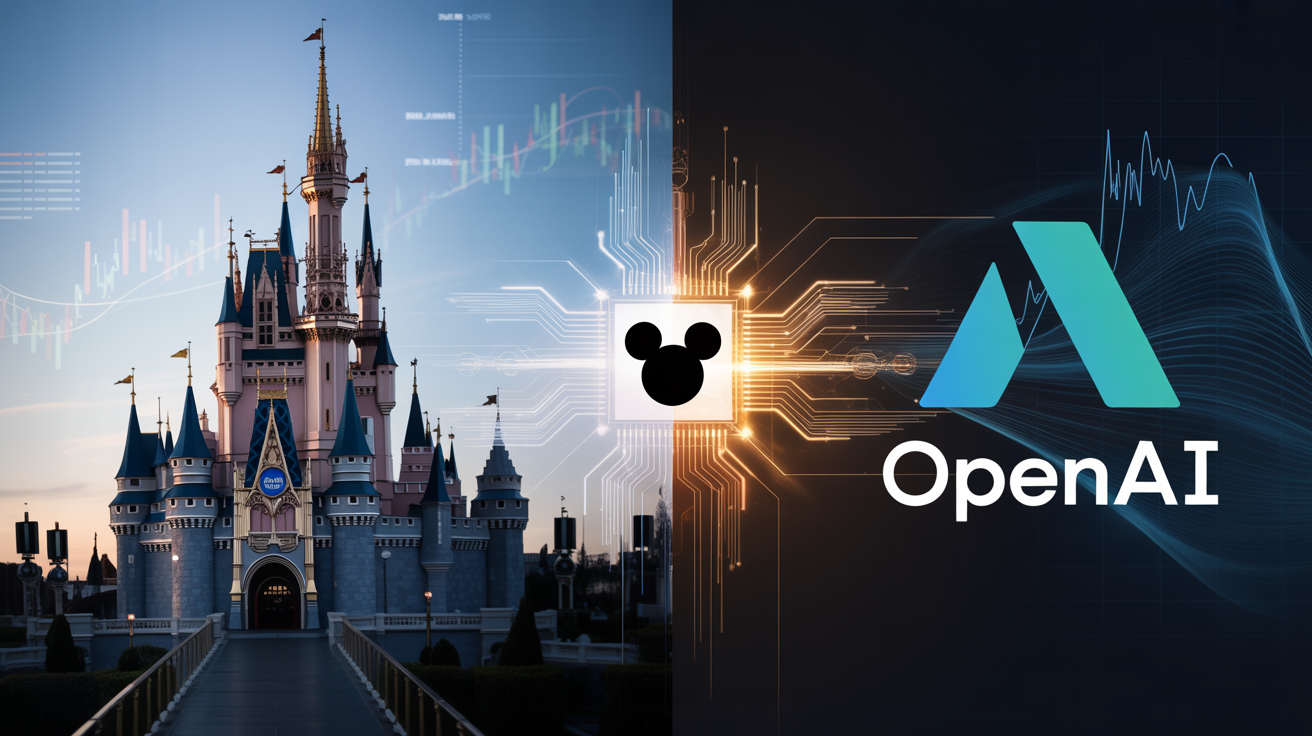
On December 11, 2025, The Walt Disney Company announced a $1 billion equity investment in OpenAI, coupled with a three-year licensing agreement that will allow the AI company's Sora video generator and ChatGPT Images to use over 200 Disney characters from its Marvel, Pixar, and Star Wars franchises. Within hours, Hollywood exploded in fury.
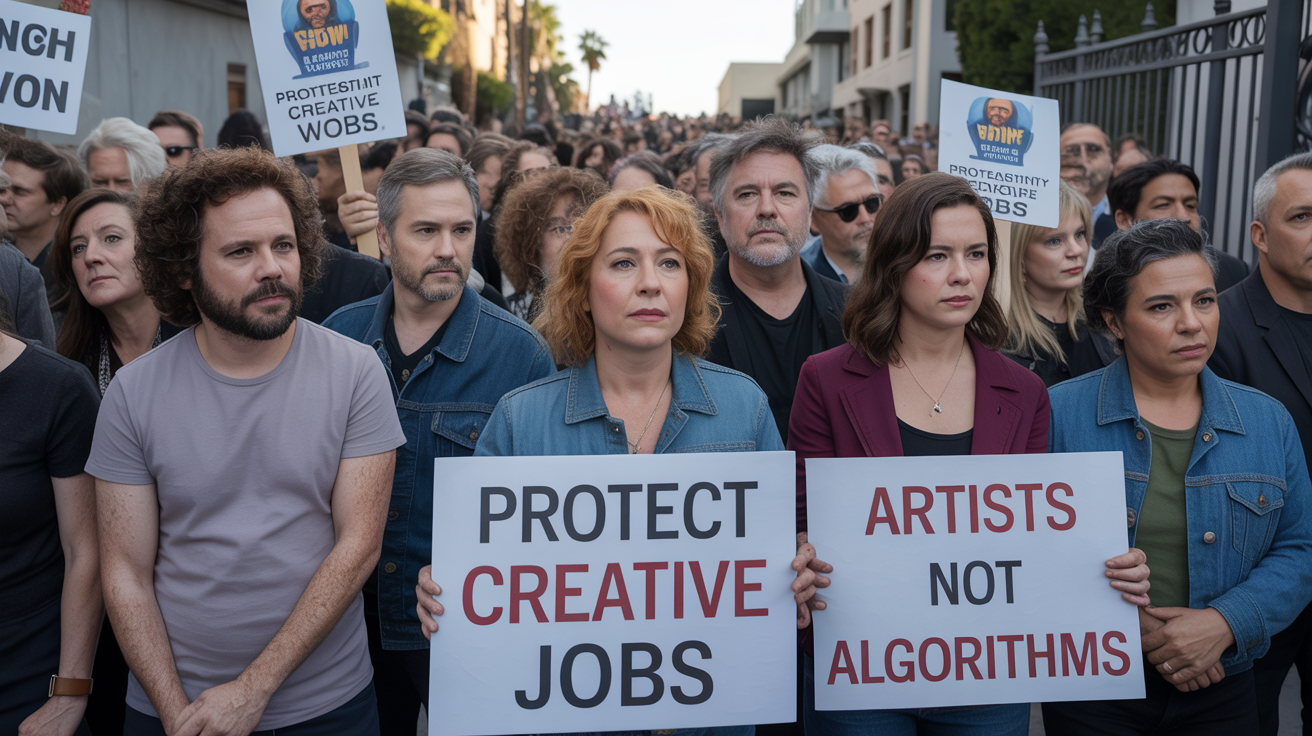
"F—k gen AI," tweeted Dana Terrace, creator of Disney's The Owl House, calling for viewers to pirate her show in protest. Directors Guillermo del Toro and James Cameron have publicly stated they would "rather die" than use AI in their films. The Writers Guild of America accused Disney of "sanctioning theft" of creative work. SAG-AFTRA, representing 170,000 media professionals, warned of "real concern" despite Disney's assurances.
For Disney CEO Bob Iger, this is the future of entertainment—"imagination and creativity directly into the hands of Disney fans." For Hollywood's creative community, it's an existential threat wrapped in corporate doublespeak.
The disconnect couldn't be starker. And for investors watching the $375 billion global AI market, Disney's deal represents either a visionary pivot or a desperate gamble that could backfire spectacularly.
The Deal: Mickey Mouse Meets Machine Learning
What Disney Gets
The $1 billion investment comes with warrants to purchase additional OpenAI equity, positioning Disney as both a major customer and part-owner of the AI firm. The three-year licensing agreement grants OpenAI access to:
- 200+ animated characters from Disney, Marvel, Pixar, and Star Wars
- Iconic IP including Mickey Mouse, Darth Vader, Ariel, Iron Man, and characters from Frozen, Toy Story, and The Mandalorian
- Associated assets: costumes, props, vehicles, and environments
- Notable exclusion: Talent likenesses and voices are explicitly off-limits
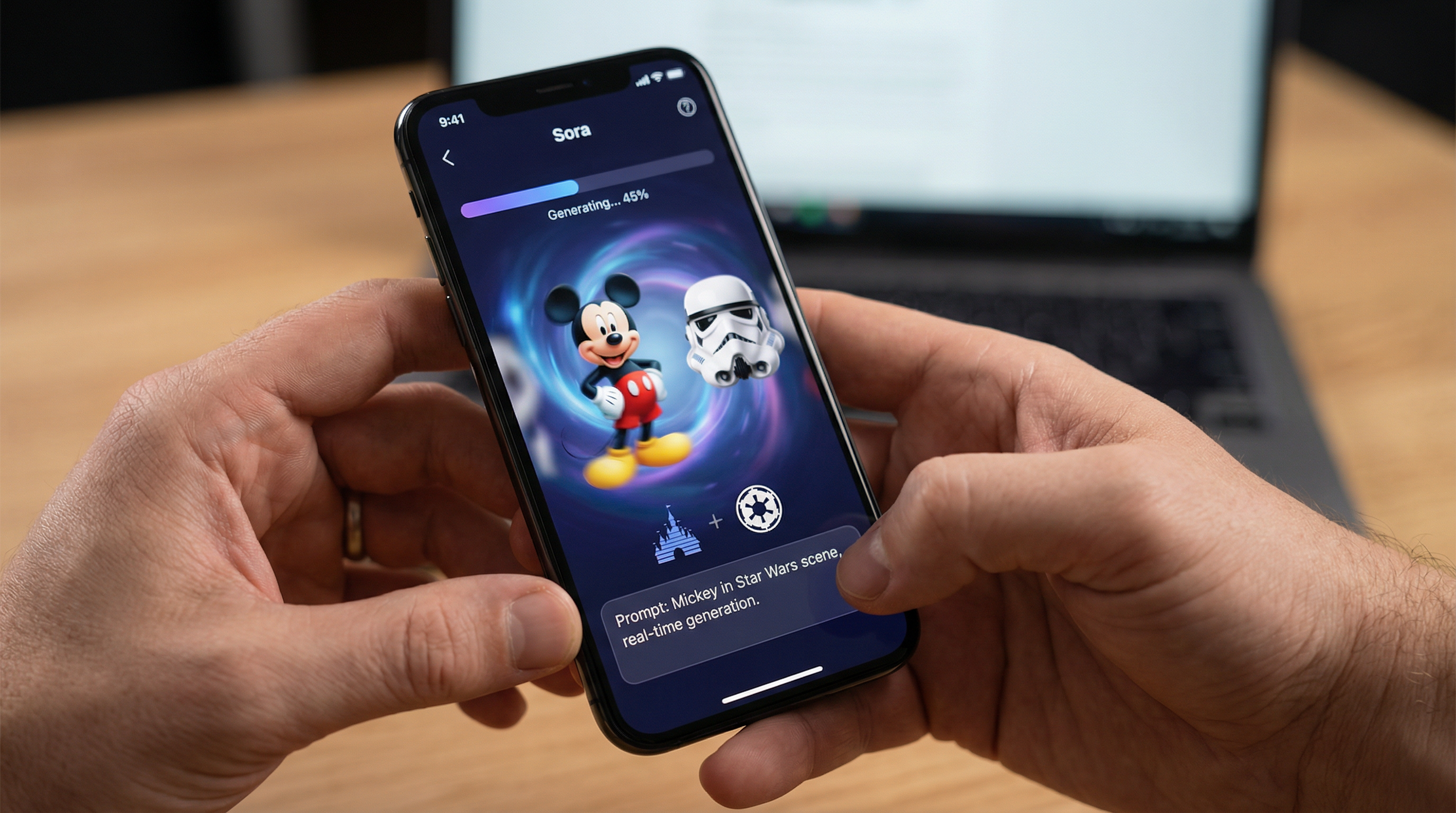
Starting in early 2026, users of Sora and ChatGPT Images will be able to generate short, user-prompted social videos and images featuring Disney characters. Curated selections of these AI-generated videos will stream on Disney+.
What OpenAI Gets
For OpenAI CEO Sam Altman, the deal is a validation play. "This demonstrates how AI companies and creative leaders can work together responsibly to promote innovation," he stated. More crucially, OpenAI gets:
- Legitimacy: Partnership with the "global gold standard for storytelling"
- Training data: Access to Disney's vast pre-AI content catalog
- Market expansion: Integration with Disney's 150 million+ Disney+ subscribers
- Precedent: A blueprint for licensing deals with other entertainment companies
What Disney Really Wants
The official line is "extending storytelling through generative AI." The reality is more pragmatic:
- Cost reduction: AI could slash expenses in visual effects, animation, and production
- Content velocity: Constant stream of fresh, user-generated content for Disney+
- IP control: Proactive participation rather than reactive litigation
- Revenue diversification: New monetization from fan-created content
- Competitive pressure: Fear of being left behind as competitors embrace AI
Bob Iger has reportedly expressed frustration with Disney's slow internal AI progress. This deal is a shortcut—but one that's already proving costly in ways that don't show up on a balance sheet.
Hollywood's Fury: "This Is Theft"
The Writers Guild Strikes Back
The Writers Guild of America, fresh from its 2023 strike that included AI protections in the final contract, didn't mince words:
"Disney's deal appears to sanction its theft of our work and cedes the value of what we create to a tech company that has built its business off our backs."
The WGA plans to meet with Disney to investigate whether the deal violates their contract, particularly regarding the use of members' work in user-generated videos. The guild's concern is existential: if fans can generate "new" Star Wars or Marvel content with AI, who needs writers?
SAG-AFTRA: "Everyone Is Incredibly Worried"
Despite Disney and OpenAI's assurances that the deal excludes talent likenesses and voices, SAG-AFTRA remains skeptical. Duncan Crabtree-Ireland, the union's executive director, told reporters:
"Everyone in the entertainment industry, especially all the creative talent, are incredibly worried about what the implications are."
The union stated it will "closely monitor the deal and its implementation to ensure compliance with our contracts and with applicable laws protecting image, voice, and likeness." Translation: We don't trust you, and we're watching.
The concern isn't theoretical. OpenAI's Sora has already generated "disrespectful" depictions of public figures like Martin Luther King Jr., leading to his likeness being banned on the platform. If AI can't respect historical figures, why should creators trust it with their livelihoods?
The UK Weighs In
Equity, a UK entertainment trade union, reinforced that the deal highlights why its members are fighting for AI protections:
"The recorded material that will be sold on as part of this eye-watering big money deal are the result of creatives' professional work, and their rights must be protected."
The message to Disney: You're profiting from work created by humans, then using it to potentially replace those same humans. That's not innovation—it's exploitation.
Creators Rebel
Beyond the unions, individual creators are in open revolt:
- Dana Terrace (The Owl House creator): Called for piracy of her own show, adding "F—k gen AI"
- Guillermo del Toro: "I would rather die than use AI in my films"
- James Cameron: Has warned about AI's dangers in filmmaking
- Online backlash: "Massive" response on social media, with calls to boycott Disney and predictions of "AI slop" flooding Disney+
One X (Twitter) user summed up the sentiment: "Disney's move is a disgrace to the entire animation industry."
Bob Iger's Vision: Innovation or Delusion?
The Official Line
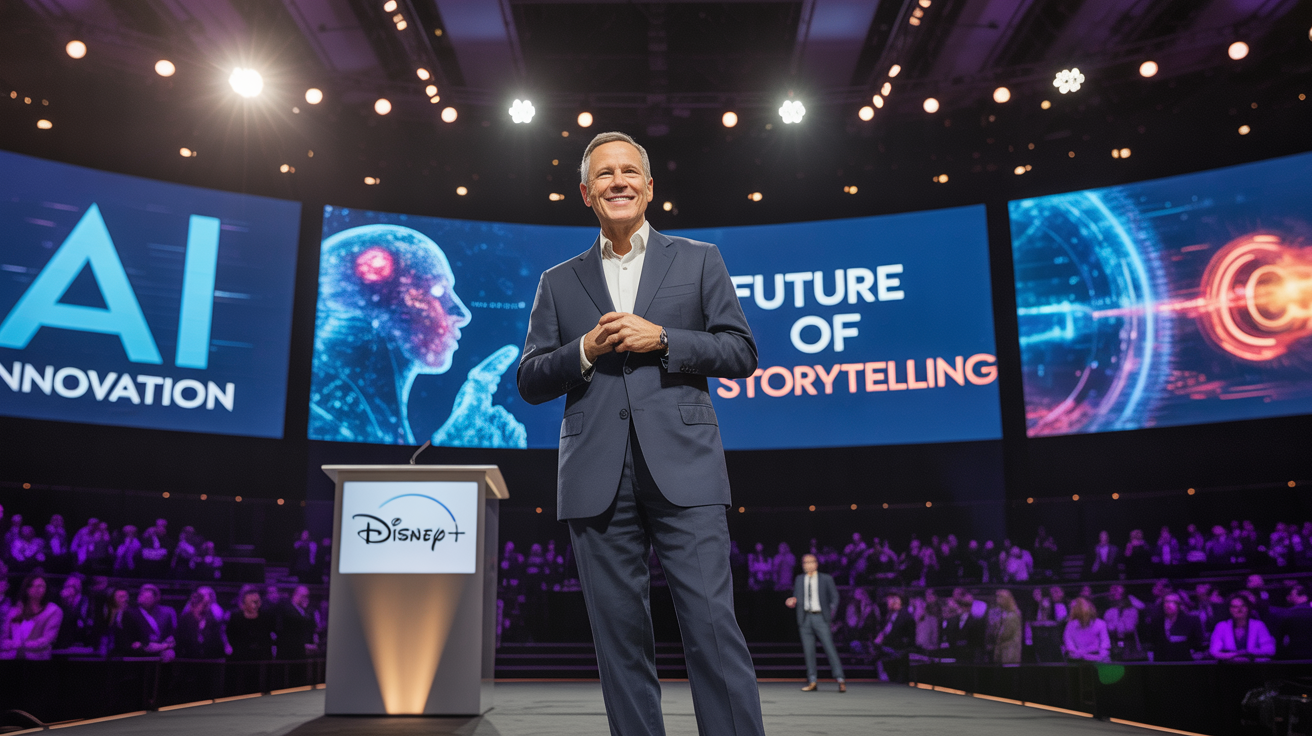
Bob Iger has framed the OpenAI partnership as both inevitable and beneficial:
"Technological innovation has always shaped entertainment, and the rapid advancement of AI is an important moment for our industry. Our collaboration with OpenAI will thoughtfully and responsibly extend the reach of our storytelling through generative AI, while respecting and protecting creators and their works."
Iger has also assured critics that the deal "does not threaten creators' jobs, but rather honors them through license fees and safeguards."
There's just one problem: Disney's own internal AI efforts tell a very different story.
Disney's AI Reality Check
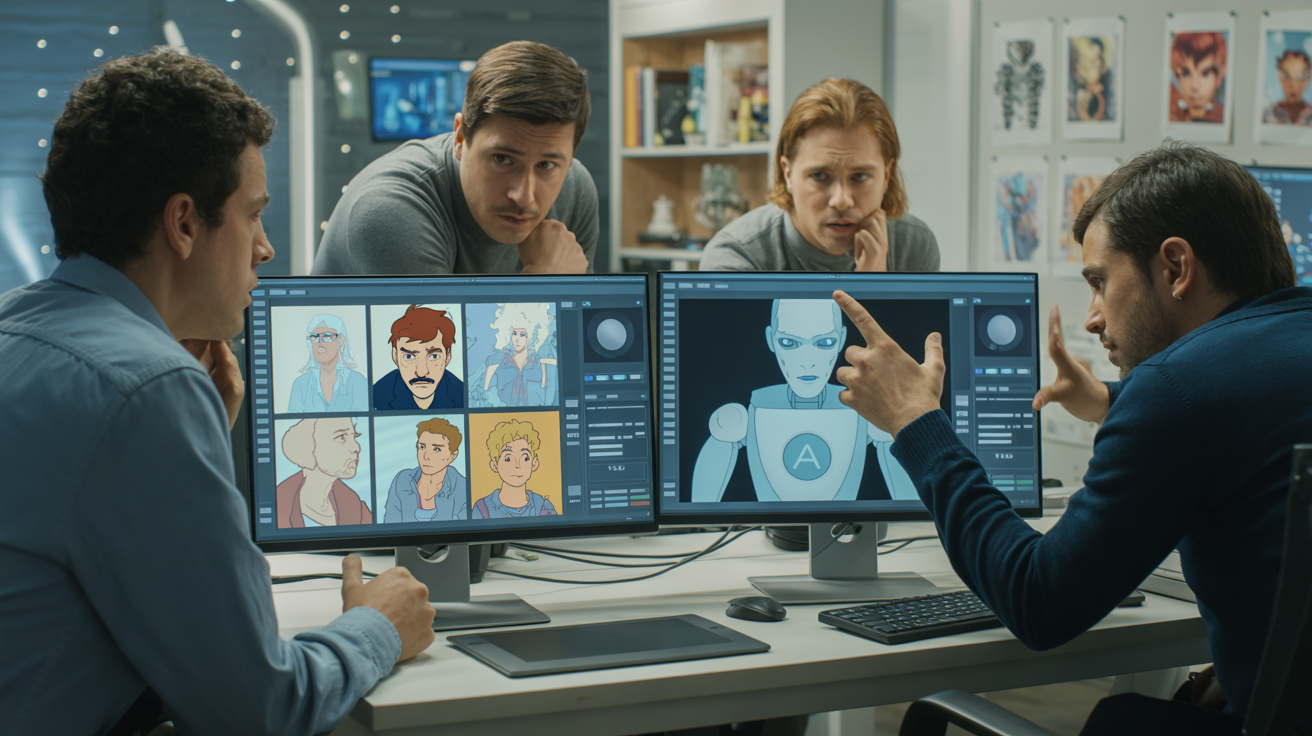
Before the OpenAI deal, Disney established an internal AI task force to explore cost reduction and efficiency. According to industry insiders, the initiative hit a wall:
Cultural Resistance: Actors, animators, and post-production experts vocally opposed AI integration. The creative community within Disney saw AI as a threat to artistic integrity and job security. This wasn't passive resistance—it was active opposition that made progress nearly impossible.
Technical Limitations: Disney's high standards for feature-film quality proved incompatible with current AI capabilities. The technology struggled with:
- Maintaining visual consistency across extended sequences
- Delivering high-resolution video at theatrical standards
- Replicating the nuanced artistry of Disney's animation
- Meeting the demanding requirements for complex VFX work
Executive Frustration: Iger reportedly expressed frustration with the slow progress. Ben Stanbury, an executive responsible for integrating AI, was dismissed. Insiders cited "unrealistic goals, short timelines, and the technology's immaturity for Disney's demands."
The Internal Contradiction
Here's what this means: Disney's internal team, with direct access to Disney's creative processes and standards, concluded that AI isn't ready for Disney-quality production work. Yet Iger is betting $1 billion that OpenAI can do what Disney's own experts couldn't.
Either Disney's internal team was incompetent (unlikely), or this deal is less about AI's capabilities and more about:
- Appearing innovative to Wall Street
- Generating new revenue from fan-created content
- Positioning Disney as "AI-forward" in a competitive landscape
- Offloading the difficult technical work to OpenAI
None of these goals require AI to actually work at Disney's quality standards. They just require it to be "good enough" for user-generated social media content.
The Irony: Disney the Copyright Warrior Becomes Disney the AI Partner
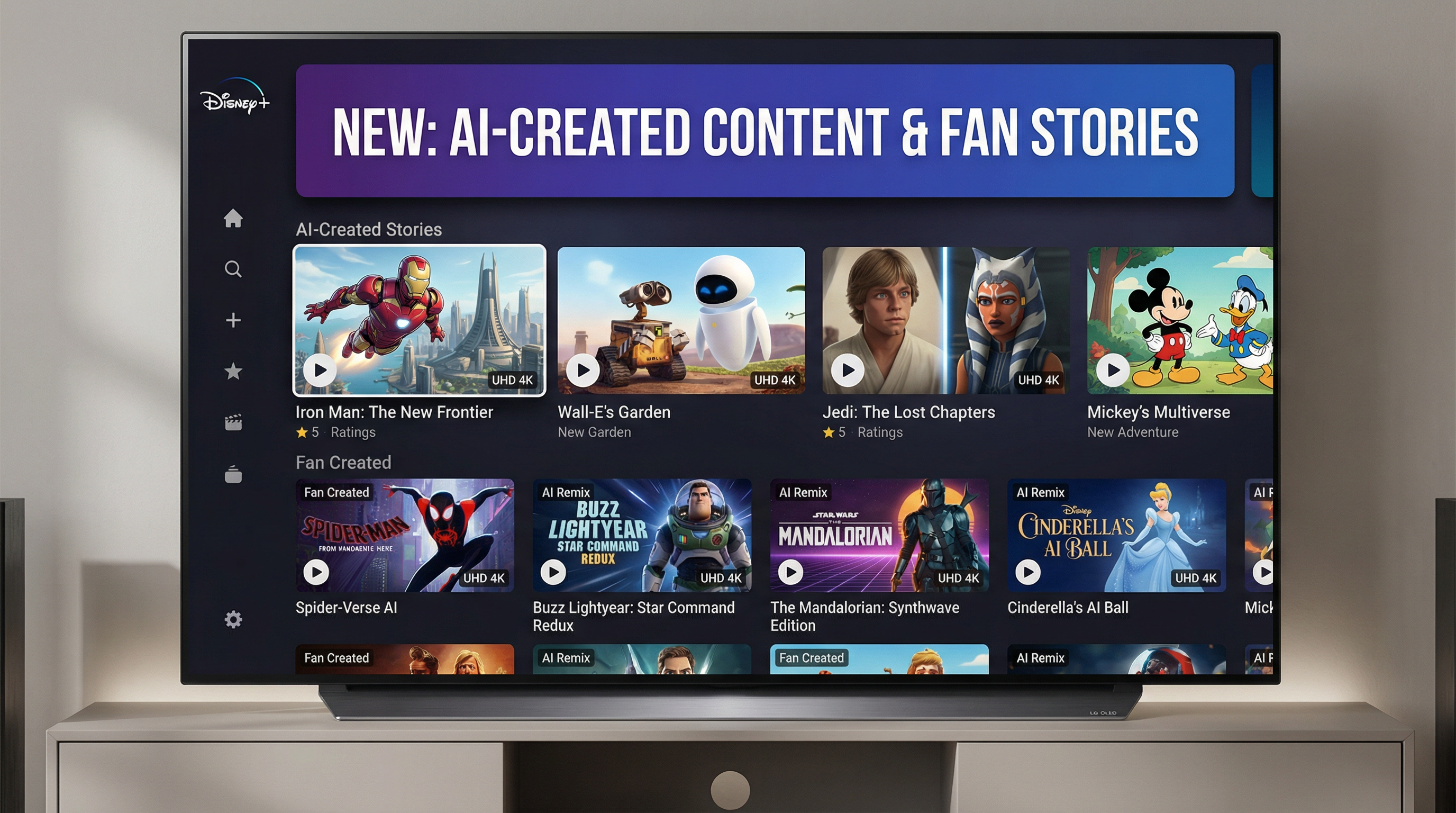
The most striking aspect of Disney's OpenAI deal is the company's complete reversal on AI and intellectual property.
Disney the Litigator
Disney has been one of the most aggressive defenders of its intellectual property, sending cease-and-desist letters and filing lawsuits against:
- Character.AI and Google: For alleged copyright infringement after their AI chatbots used Disney characters without permission
- Midjourney: For allegedly training AI models on Disney's copyrighted images
- MiniMax: For similar IP violations
Disney's legal department built its reputation on zealous IP protection. The company's copyright lobbying literally extended copyright terms to protect Mickey Mouse from entering the public domain.
Disney the Collaborator
Now, Disney is:
- Licensing 200+ characters to an AI company
- Allowing user-generated AI content featuring its IP
- Investing $1 billion in a company that potentially trained on copyrighted material
- Setting a precedent for how its IP can be used in AI systems
What changed? Not Disney's respect for intellectual property. What changed is that Disney realized it could make more money licensing its IP to AI companies than fighting them in court.
This is rational business strategy, but it exposes the hypocrisy: IP rights apparently matter when others profit from Disney's work, but not when Disney profits from making that same work available to AI systems.
The Training Data Question
A critical question remains unanswered: Was Disney's IP already in OpenAI's training data? If Sora and ChatGPT were trained on publicly available images and videos of Disney characters (which is almost certain), then this deal isn't about preventing AI use of Disney IP—it's about retroactively monetizing something that already happened.
Disney is essentially saying: "You're going to use our characters anyway, so we might as well get paid for it and control how it happens."
That's not principled IP protection. That's cutting your losses.
What's Really at Stake: Jobs, Creativity, and the Soul of Entertainment
The Job Displacement Reality
Despite Iger's assurances, the math is straightforward:
Animation: If AI can generate "acceptable" animated content, why hire as many animators? Disney's own internal discussions reportedly focused on using AI to reduce costs in expensive production areas.
Visual Effects: VFX is labor-intensive and expensive. AI that can generate "good enough" effects at a fraction of the cost will be irresistible to studios.
Writing: If user-generated AI content drives Disney+ engagement, that's content Disney doesn't have to commission from writers.
Voice Acting: While the current deal excludes voices, that's an obvious next frontier once the technology improves.
The promise is always the same: AI will "augment" human creativity, not replace it. But "augment" is a euphemism for "reduce the number of humans we need."
The Quality Question
There's a reason Disney's internal AI efforts failed: AI-generated content currently can't match Disney's quality standards. But here's the terrifying question for Hollywood:
What if "good enough" is good enough for audiences?
Netflix has already demonstrated that quantity often beats quality in streaming. If Disney+ can flood the platform with AI-generated Marvel shorts, Star Wars fan films, and Pixar-style content—even if it's inferior to theatrical releases—will subscribers care? Or will they just consume more content?
The entertainment industry is about to find out if audiences value human artistry or just want more stuff.
The Artistic Integrity Problem
Guillermo del Toro's "rather die" comment isn't hyperbole—it's a fundamental statement about artistic values. For many creators, AI-generated content isn't just inferior; it's fundamentally inauthentic.
Disney built its empire on the tagline "The Most Magical Place on Earth." That magic came from human creativity: animators spending years perfecting a single scene, writers crafting emotionally resonant stories, voice actors bringing characters to life.
Can AI-generated content, prompted by fans and curated by algorithms, capture that magic? Or is Disney trading its creative soul for short-term engagement metrics?
The Feedback Loop Problem
Nicholas Grous, an analyst at Ark Invest, sees a potential "feedback loop" where:
- Fans generate AI content with Disney characters
- Disney identifies successful concepts from user-generated content
- Disney develops those concepts into professional productions
- The cycle repeats
This sounds innovative. It's also dystopian: Disney outsourcing creative ideation to unpaid users generating content with AI tools, then monetizing the successful concepts.
It's the ultimate culmination of spec work culture: "Create for us for free using our IP, and maybe—if your idea goes viral—we'll hire professionals to make a real version."
Investment Implications: Gold Rush or Fool's Gold?
The Bull Case
For Disney (DIS):
- New revenue streams: Monetizing user-generated content on Disney+ could drive subscriber growth and engagement
- Cost reduction: Even modest AI integration could save hundreds of millions in production costs
- IP control: Proactive AI partnerships protect Disney's IP better than reactive litigation
- Competitive positioning: Being seen as "AI-forward" appeals to growth-oriented investors
- Optionality: Warrants for additional OpenAI equity provide upside if OpenAI's valuation increases
For OpenAI:
- Validation: Disney partnership proves AI companies can work with creative industries
- Revenue: Licensing fees from Disney and potential similar deals with other studios
- Data access: Disney's catalog enhances training and fine-tuning capabilities
- Market expansion: Integration with Disney+ brings AI tools to mainstream audiences
- Blueprint: Creates framework for other entertainment partnerships
The Bear Case
For Disney (DIS):
- Brand risk: If AI-generated content is perceived as low-quality "slop," it could damage Disney's premium brand
- Labor relations: Ongoing conflict with unions could lead to strikes, production delays, and negative publicity
- Creative exodus: Top talent may refuse to work with Disney if they feel AI threatens their careers
- Technical limitations: AI may not deliver on promises, making the $1 billion investment a write-off
- Regulatory risk: Governments may restrict AI use in entertainment, particularly regarding IP and labor rights
- Audience rejection: Viewers may reject AI-generated content, making the Disney+ strategy backfire
For the Entertainment Industry:
- Devaluation: Flooding the market with AI content could devalue all content, hurting studios and creators alike
- Homogenization: AI trained on existing Disney content will generate derivative work, reducing creative diversity
- Skill degradation: If junior creatives can't get entry-level jobs due to AI, the industry loses its talent pipeline
- Legal quagmire: Ongoing questions about IP ownership of AI-generated content using licensed characters
The Verdict: High Risk, Unclear Reward
Disney's $1 billion bet is a classic "innovator's dilemma" play: disrupt yourself before someone else does. The problem is that Disney is disrupting its core strength—unparalleled creative quality—in pursuit of a strategy that prioritizes engagement over artistry.
For investors, the key questions are:
-
Will audiences embrace AI-generated Disney content? Unknown. Early indicators suggest significant backlash.
-
Can AI deliver cost savings without sacrificing quality? Disney's internal efforts suggest no—at least not yet.
-
Will labor conflicts escalate? Almost certainly. This deal reignites the same issues that sparked the 2023 strikes.
-
Is this a sustainable competitive advantage? Unclear. Other studios can make similar deals with AI companies.
-
What's the downside if it fails? $1 billion in direct costs, plus immeasurable damage to Disney's brand and creative relationships.
The bull case requires believing that:
- AI quality will improve dramatically in the near term
- Audiences will accept AI-generated content
- Unions won't successfully block AI integration
- Disney's brand can withstand creative community backlash
- The cost savings materialize without quality degradation
That's a lot of bets stacked on top of each other.
The Bottom Line: Innovation or Desperation?
Bob Iger's OpenAI deal reveals a fundamental tension in modern entertainment: the conflict between creative excellence and financial engineering.
Disney built its empire on a simple promise: uncompromising creative quality. Walt Disney famously said, "Whatever you do, do it well. Do it so well that when people see you do it, they will want to come back and see you do it again, and they will want to bring others and show them how well you do what you do."
That philosophy led to Snow White, The Lion King, the Marvel Cinematic Universe, and Frozen—films that defined generations.
The OpenAI deal represents a different philosophy: good enough is good enough, as long as it's cheap and scalable. User-generated AI content might not match the quality of Pixar films, but if it keeps subscribers engaged for a fraction of the cost, does Disney care?
The creative community's revolt suggests that Disney's artists, writers, and performers still believe in the old philosophy. They're fighting not just for their jobs, but for the idea that entertainment should be created by humans, for humans.
For investors, Disney's AI gamble is either visionary leadership or a desperate attempt to cut costs by sacrificing the very artistry that made Disney valuable in the first place.
The answer will determine whether Disney's next act is a triumph or a tragedy—and whether Hollywood's creative community gets a vote.
Key Takeaways
The Deal:
- Disney invests $1 billion in OpenAI with warrants for additional equity
- Three-year licensing agreement for 200+ Disney characters in Sora and ChatGPT
- User-generated AI content launches early 2026, streams on Disney+
The Backlash:
- WGA accuses Disney of "sanctioning theft" of creative work
- SAG-AFTRA warns of "real concern" despite exclusion of talent likenesses
- Individual creators from del Toro to Terrace openly oppose AI integration
- "Massive" public backlash predicting quality degradation
The Irony:
- Disney previously sued AI companies for using its IP
- Now licensing that same IP to OpenAI for $1 billion
- Shift from reactive litigation to proactive monetization
The Internal Reality:
- Disney's own AI efforts failed due to cultural resistance and technical limitations
- Iger's frustration led to executive dismissal
- Partnership outsources AI development Disney couldn't achieve internally
Investment Implications:
- High-risk bet on unproven technology and audience acceptance
- Potential for cost savings versus brand damage
- Labor conflict likely to escalate
- Success requires multiple favorable outcomes stacking simultaneously
Sources & References
- 1. [The Guardian: Disney invests $1bn in OpenAI in groundbreaking deal for Sora AI video tool](https://www.theguardian.com/business/2025/dec/11/disney-open-ai-sora-video-deal)
- 2. [CNBC: Disney strikes deal with OpenAI to bring characters to Sora video creator](https://www.cnbc.com/2025/12/11/disney-openai-sora-characters-video.html)
- 3. [The Hollywood Reporter: Disney to Invest $1 Billion in OpenAI in Major Deal That Boosts Sora](https://www.hollywoodreporter.com/business/business-news/disney-to-invest-1-billion-in-openai-in-major-deal-that-boosts-sora-1236447942/)
- 4. [Business Insider: Disney's AI strategy: From DisneyGPT to the $1 billion OpenAI deal](https://www.businessinsider.com/disney-ai-strategy-employees-disneygpt-openai-deal-chatgpt-2025-12)
- 5. [Reuters: Disney creates task force to explore AI and cut costs](https://www.reuters.com/technology/disney-creates-task-force-explore-ai-cut-costs-sources-2023-08-08/)
- 6. [The Wrap: How Disney's AI Ambitions Hit a Wall (Exclusive)](https://www.thewrap.com/how-disneys-ai-ambitions-hit-a-wall-exclusive/)
- 7. [Gizmodo: Hollywood's Labor Unions Respond to Disney's 'Dystopian' New AI Deal](https://gizmodo.com/hollywoods-labor-unions-respond-to-disneys-dystopian-new-ai-deal-2000698767)
- 8. [BBC: Disney and OpenAI strike controversial $1bn deal](https://www.bbc.com/news/articles/c5ydp1gdqwqo)
- 9. [NPR: Disney makes a $1 billion bet on AI](https://www.npr.org/2025/12/11/nx-s1-5640837/disney-openai-sora-deal)
- 10. [Fortune: Is Disney's pre-AI content now more valuable than 'AI slop'?](https://fortune.com/2025/12/11/pre-post-ai-content-disney-openai-netflix-warner-slop-analysis-ark-invest/)
- 11. [Euronews: Disney sparks backlash as CEO Bob Iger says company to allow AI-generated content](https://www.euronews.com/culture/2025/11/17/disney-sparks-backlash-as-ceo-bob-iger-says-company-to-allow-ai-generated-content)
- 12. [Forbes: Disney Is About To Embrace Generative AI, And The Internet Is Furious](https://www.forbes.com/sites/danidiplacido/2025/11/16/disney-is-about-to-embrace-generative-ai-and-the-internet-is-furious/)
Disclaimer: This analysis is for informational purposes only and does not constitute investment advice. Markets and competitive dynamics can change rapidly in the technology sector. Taggart is not a licensed financial advisor and does not claim to provide professional financial guidance. Readers should conduct their own research and consult with qualified financial professionals before making investment decisions.

Taggart Buie
Writer, Analyst, and Researcher