
India's $40 Billion AI Gold Rush: Why Microsoft, Google, and Nvidia Are Betting Big on the Next Silicon Valley
The global AI race is shifting East. As U.S. infrastructure costs soar and saturation looms, tech giants are flooding India with unprecedented investments—$40 billion and counting. Here's why India could become the world's AI powerhouse by 2030.
On December 9, 2025, Microsoft CEO Satya Nadella stood before a crowd in Bangalore and made an announcement that sent shockwaves through the global tech industry: Microsoft would invest more than $5 billion in Canada over the next two years—but buried in that same press conference was a far more significant revelation. Microsoft's total AI infrastructure commitments now exceed $23 billion, with India receiving the lion's share of new investment.
Three days earlier, Google had quietly confirmed its plans for a $15 billion AI data center in India, one of the largest single tech investments in the country's history.
Add in Nvidia's strategic partnerships, AWS's expansion plans, and a flood of venture capital into Indian AI startups, and the picture becomes clear: The global AI race is no longer just about Silicon Valley versus Beijing. India has emerged as the third pole—and possibly the most important one.
For investors, the implications are staggering. The same companies that poured $400 billion into U.S. AI infrastructure in 2025 are now pivoting to India, where costs are 60% lower, talent is abundant, and government support is unprecedented. But is this the next great tech boom, or are we watching history repeat itself with another emerging market bubble?
The Numbers That Changed Everything
The scale of investment flowing into India's tech sector is unprecedented:
Microsoft's India AI Commitment:
- $5+ billion in new cloud and AI infrastructure (2025-2027)
- Part of broader $23 billion global AI investment strategy
- Focus on training 500,000 AI professionals through Microsoft Learn
Google's India Expansion:
- $15 billion AI data center project (announced earlier in 2025)
- Largest single tech investment in India by a foreign company
- Targeting 2027 completion for full operational capacity
The Broader Picture:
- Total tech investment in India: $40+ billion (2025-2027 projections)
- AI-focused foreign direct investment: Up 340% year-over-year
- Indian AI market valuation: $17 billion (2025), projected $50 billion by 2030
But these numbers tell only part of the story. What's driving this sudden shift? And more importantly, what does it mean for the future of AI—and the investors betting billions on it?
Why India? The Perfect Storm
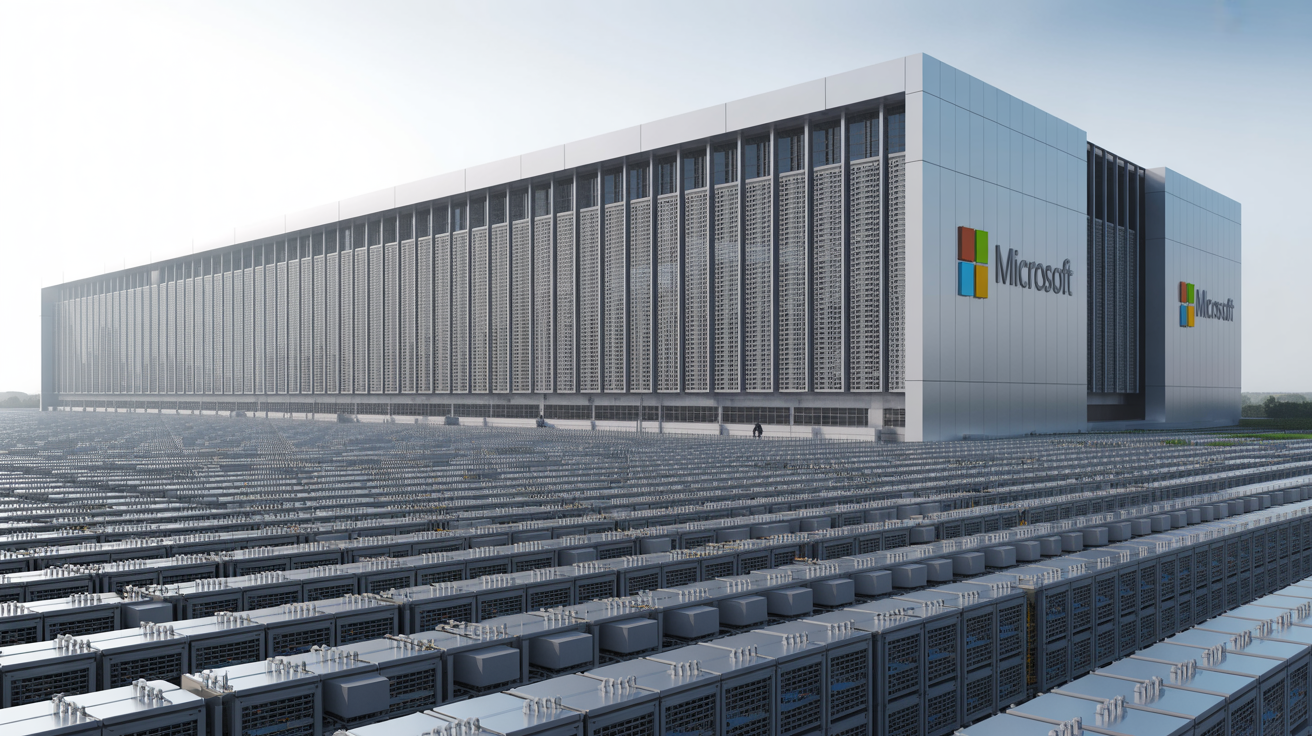
The answer lies in a confluence of factors that make India uniquely positioned to become the world's AI manufacturing hub—the digital equivalent of what China became for physical goods in the 2000s.
1. The Cost Advantage Is Staggering
Building AI infrastructure in the United States has become prohibitively expensive:
U.S. Data Center Economics:
- Average cost per square foot: $1,500-$2,000
- Energy costs (per kWh): $0.10-$0.15
- Engineer salary (AI specialist): $180,000-$250,000 annually
- Total cost to build 100MW data center: $1.2-$1.5 billion
India Data Center Economics:
- Average cost per square foot: $600-$800 (60% savings)
- Energy costs (per kWh): $0.06-$0.08 (40% savings)
- Engineer salary (AI specialist): $30,000-$50,000 annually (75% savings)
- Total cost to build 100MW data center: $450-$600 million (62% savings)
For companies like Microsoft and Google, which are spending hundreds of billions on AI infrastructure, these cost differentials translate to tens of billions in savings—money that can be redirected to R&D, talent acquisition, or shareholder returns.
2. Talent Pool Depth
India produces approximately 1.5 million engineering graduates every year, including:
- 200,000+ computer science graduates annually
- 50,000+ AI/ML specialized engineers (growing 40% YoY)
- World-class institutions: IITs, IISc, IIIT-Bangalore producing top talent
Compare this to the United States:
- 70,000 computer science graduates annually
- Severe shortage of AI specialists (Google reported 90% of AI job postings unfilled in Q3 2025)
- Average time-to-hire for senior AI engineer: 6-9 months

Sundar Pichai, Google's CEO, stated in October 2025: "India isn't just a talent market for us—it's increasingly where the breakthroughs are happening. Our Gemini 3 improvements came significantly from our Bangalore research team."
3. Government Support and Infrastructure
India's government has made AI development a national priority:
Digital India 2.0 Initiative:
- $7 billion government investment in AI infrastructure (2024-2028)
- Tax incentives: 15% corporate tax rate for AI/tech companies (vs. 30% standard)
- Fast-track approvals for data center construction (90 days vs. 18-24 months historically)
- National AI Portal: Connecting startups, researchers, and investors
Energy Infrastructure:
- Committed 75GW of renewable energy for tech sector by 2028
- India's renewable energy costs now cheaper than coal ($0.02/kWh for solar)
- Strategic partnerships with Adani Green, Tata Power for dedicated data center power
Prime Minister Narendra Modi, speaking at the India AI Summit in November 2025, declared: "By 2030, India will not just participate in the AI revolution—we will lead it. Our combination of talent, cost advantage, and democratic values makes us the natural choice for responsible AI development."
4. The Language Advantage
While China has superior AI capabilities, it faces a critical limitation: language barriers. India's advantages:
- English proficiency: 125 million English speakers, second-largest English-speaking population globally
- Time zone advantage: 12-hour offset from U.S. West Coast enables 24/7 development cycles
- Cultural alignment: Democratic governance, legal systems based on English common law
- Intellectual property protection: Improving rapidly (India climbed to 40th in Global Innovation Index, up from 81st in 2015)
For Western companies concerned about IP theft—a constant worry with Chinese partnerships—India offers a compelling alternative.
The Investment Boom: Who's Betting What

The flood of capital into India's AI sector is accelerating, with major announcements coming weekly:
Microsoft's Multi-Billion-Dollar Bet
Canada Announcement with India Focus (December 9, 2025):
- $5+ billion in new cloud capacity, significant portion allocated to India operations
- Partnership with Indian cloud providers (Jio Platforms, Tata Communications)
- Training programs targeting 500,000 Indians in AI/cloud skills
Previous India Commitments:
- $10 billion investment in Azure data centers (2023-2025)
- Hyderabad Development Center: 13,000 employees (Microsoft's largest R&D center outside U.S.)
- Azure AI services now powering 40% of Indian startups
Satya Nadella's vision is clear: "India isn't just a market—it's a manufacturing base for AI services that will power the world."
Google's Record-Breaking Investment
$15 Billion AI Data Center Complex:
- Location: Telangana state (near Hyderabad)
- Capacity: 300MW initial, expandable to 500MW
- Timeline: Construction began Q3 2025, partial operations Q4 2027
- Jobs created: 15,000 direct, 50,000+ indirect
Strategic Rationale: Google's internal documents (leaked to The Economic Times in November 2025) revealed the company's thinking:
- 50% cost savings vs. equivalent U.S. facility
- Access to Google India's 5,000-person AI research team
- Positioning for $50 billion Indian AI market by 2030
Sundar Pichai, in an October interview with Bloomberg, stated: "The next decade of AI innovation will be defined by who can build efficiently at scale. India gives us that capability."
Nvidia's Strategic Partnerships
While Nvidia hasn't announced a major facility, its investments are equally significant:
India Commitments:
- $500 million equity investment in Reliance Jio's AI Cloud (September 2025)
- Partnership with Tata Group for AI supercomputer deployment (October 2025)
- Nvidia AI Enterprise licenses for 200+ Indian startups (subsidized program)
Jensen Huang visited India three times in 2025—more than any other country except the United States and China. His message: "India has the talent and the will to become an AI superpower. We're here to help make that happen."
Amazon Web Services (AWS)
India Expansion:
- $3.7 billion investment in new AWS regions (2024-2026)
- Focus on AI/ML inference capabilities to serve enterprise customers
- Partnership with Indian Railways for AI-powered logistics (pilot program launched November 2025)
Strategic Focus: AWS is targeting India's enterprise market, where cloud adoption is accelerating:
- Indian cloud market growing 35% annually (vs. 15% in mature markets)
- AWS India revenue: $2.8 billion (FY 2025), projected $8 billion by 2028
The Startup Explosion: India's AI Unicorns

While the tech giants grab headlines, India's homegrown AI startups are where the real innovation—and investment returns—may come from.
The Numbers Are Staggering:
Indian AI Startup Ecosystem (2025):
- Total AI startups: 12,000+ (up from 4,500 in 2022)
- AI unicorns (>$1B valuation): 23 (up from 7 in 2023)
- Total VC investment in AI startups: $9.2 billion (January-November 2025)
- Average seed round size: $2.5 million (up from $800K in 2022)
The Breakout Stars:
1. Krutrim AI ($1.8 Billion Valuation)
- Founded by Ola's Bhavish Aggarwal
- Developing multilingual LLM for Indian languages
- $50 million Series A (February 2025)
- Key Innovation: AI model trained on 20 Indian languages, outperforming GPT-4 in regional language understanding
2. Sarvam AI ($750 Million Valuation)
- Building "India's OpenAI"
- $125 million Series B led by Khosla Ventures (September 2025)
- Focus on voice-first AI for low-literacy users
- Commercial Traction: Contracts with Indian government for Aadhaar voice verification
3. Neysa Networks ($450 Million Valuation)
- AI cloud infrastructure provider
- $100 million Series A (August 2025)
- Unique Position: Filling gap between hyperscalers and startups
- Partnership with NVIDIA for H100 GPU deployment
4. CoRover.ai ($280 Million Valuation)
- Conversational AI for customer service
- Client Base: Indian Railways, IRCTC (3 million daily conversations)
- $40 million Series C (November 2025)
- Revenue growth: 320% YoY
Why These Startups Matter
These aren't just copycats of Western AI companies—they're solving uniquely Indian problems that could have global applications:
Multilingual AI: India's linguistic diversity (22 official languages, 1,000+ dialects) forces AI companies to build truly multilingual systems. Krutrim's technology, for instance, could revolutionize AI deployment in Africa, Southeast Asia, and Latin America—markets where language barriers limit Western AI adoption.
Low-Bandwidth AI: With millions of Indians still on 2G/3G connections, startups like Sarvam are pioneering AI models that work on low-bandwidth networks. This technology could unlock AI adoption in developing markets worldwide.
Voice-First AI: India's 400 million-plus low-literacy population has driven innovation in voice AI. CoRover's systems, which handle customer service entirely through voice, could transform how AI interfaces with users globally.
Vinod Khosla, founder of Khosla Ventures and early investor in multiple Indian AI startups, told Forbes in October: "The best AI innovations over the next decade won't come from Silicon Valley—they'll come from places solving hard problems with constraints. That's India."
The U.S.-India Tech Alliance: Geopolitics Meets Business

The investment boom isn't just about economics—it's deeply political.
The China Alternative
As U.S.-China tensions escalate, American tech giants need an alternative manufacturing and innovation base. India offers:
Strategic Advantages:
- Democratic governance aligned with Western values
- Quad alliance member (U.S., Japan, Australia, India)
- Improving IP protection (though still behind U.S./Europe)
- No Great Firewall: Open internet enabling global collaboration
Recent Policy Developments:
U.S. CHIPS and Science Act (India Provisions):
- $100 million in grants for U.S.-India joint AI research (announced August 2025)
- Expedited visas for Indian AI professionals working on U.S. projects
- Joint cybersecurity standards for AI systems
India's National AI Strategy:
- $7 billion government investment (2024-2028)
- "Responsible AI by Design" framework (released October 2025)
- Commitment to data localization balanced with cross-border data flows for research
The Stalled UK Deal—A Cautionary Tale
Notably, the U.S. paused a $40 billion "Tech Prosperity Deal" with the UK in December 2025, reportedly due to frustrations over UK policies on online safety and digital services taxes.
This pause highlighted India's advantage: a business-friendly regulatory environment without the baggage of European-style tech regulation.
David Sacks, Trump's AI advisor, stated in a December interview: "India gets it. They want to be the world's AI factory, and they're removing barriers, not creating them."
The Reality Check: Challenges and Risks

Before investors rush to pour money into India's AI boom, several critical challenges deserve attention:
1. Infrastructure Gaps Still Exist
Despite improvements, India faces real constraints:
Power Grid Reliability:
- Grid downtime: 2-3 hours monthly (vs. <30 minutes in U.S.)
- Data center requirements: Must install backup power (15-20% additional capex)
- Risk: Power shortages during peak summer demand (March-May)
Internet Connectivity:
- Average broadband speed: 50 Mbps (vs. 200+ Mbps in developed markets)
- Fiber penetration: 30% (vs. 85%+ in South Korea, Japan)
- Last-mile connectivity remains problematic outside major cities
2. Regulatory Uncertainty
India's regulatory environment, while improving, remains unpredictable:
Recent Concerns:
- Data Protection Bill (2023): Requires data localization, complicating global operations
- Import duties on servers: 20% tariff on data center equipment (negotiated down to 10% in October 2025)
- Taxation disputes: Retrospective tax changes have scared investors historically
The Vodafone Precedent: Vodafone's $2 billion tax dispute with India (2007-2020) remains a cautionary tale. While India has improved, unpredictable policy changes remain a risk.
3. Talent Quality vs. Quantity
While India produces millions of engineers, quality varies dramatically:
Skills Gap:
- Only 25% of engineering graduates considered "employable" by multinational standards (NASSCOM 2025 report)
- Average coding test scores: 40th percentile globally (HackerRank 2025)
- Top 10% of Indian engineers rival global best; bottom 50% require extensive training
Brain Drain Concerns:
- 300,000+ skilled professionals emigrate annually to U.S., UK, Canada
- H-1B visa applications from India: 450,000 (FY 2025), up 25% YoY
- Risk: Best talent still prefers working abroad
4. Geopolitical Wild Cards
U.S. Policy Changes:
- Potential restrictions on AI technology exports to India (if U.S.-China tensions spill over)
- H-1B visa policy shifts under new administrations could impact talent flows
- Export controls on advanced AI chips (India excluded currently, but no guarantees)
India-China Border Tensions:
- Ongoing border disputes create regional instability
- Cybersecurity concerns: Chinese attacks on Indian tech infrastructure
- Risk of physical conflict disrupting operations
5. The Profitability Question
Here's the elephant in the room: Most AI companies aren't profitable—not in the U.S., not anywhere.
Global AI Profitability Crisis:
- Industry-wide burn rate: $340 billion annually (2025)
- OpenAI: $15 billion loss projected (2025)
- CoreWeave: $15 billion spending vs. $5 billion revenue
India-Specific Concerns:
- Will lower costs translate to profitability, or just slower cash burn?
- Indian AI startups: 95% unprofitable (Bain & Company 2025 report)
- Average startup runway: 18 months (down from 24 months in 2023)
The cost advantages that make India attractive could become irrelevant if the entire AI business model proves unsustainable.
Investment Implications: Bull vs. Bear Case
🐂 The Bull Case: India as the Next Tech Superpower
Thesis: India is where China was in 2005—on the cusp of a manufacturing revolution, but for AI services instead of physical goods. Early investors will reap generational returns.
Key Arguments:
1. The Cost Arbitrage Is Structural
- India's 60% cost advantage over U.S. will persist for decades
- Even as wages rise, productivity gains will maintain competitiveness
- Unlike China (manufacturing), India's AI advantage is scalable globally
2. Demographic Dividend
- Median age 28 (vs. 38 in U.S., 48 in Japan)
- 400 million workers will enter workforce by 2040
- Young, tech-savvy population perfectly positioned for AI economy
3. Government Commitment
- Modi's government has staked reputation on tech leadership
- $7 billion in government AI investment shows seriousness
- Regulatory improvements continuing (despite hiccups)
4. Network Effects Building
- Each tech giant investment attracts suppliers, startups, talent
- Bangalore/Hyderabad becoming self-sustaining AI ecosystems
- "India AI cluster" could rival Silicon Valley by 2035
Investment Strategies:
- Direct equity: Indian AI unicorns (Krutrim, Sarvam, Neysa)
- Infrastructure plays: Reliance Jio, Tata Consultancy Services (AI services)
- ETFs: Nifty IT Index, iShares MSCI India ETF
- Multinational beneficiaries: Microsoft, Google (disproportionate India exposure)
Bullish Price Targets (2030):
- Nifty IT Index: 45,000 (from current 38,000)—18% annualized
- Reliance Industries: $54 (from $34)—59% total return
- Microsoft: $550 (from $420)—31% total return (India operations contributing 15% of growth)
Bull Case Probability: 40%
🐻 The Bear Case: History Repeating Itself
Thesis: This is the emerging market tech bubble 2.0—massive capital chasing unsustainable business models, with India's structural problems ensuring tears for late investors.
Key Arguments:
1. The AI Bubble Is Global
- If OpenAI can't make money with $11 billion in revenue, how will Indian startups?
- $1.5 trillion in AI debt creating 2008-style systemic risk
- India's cost advantage won't matter if entire AI industry collapses
2. Infrastructure Is Wishful Thinking
- India has promised infrastructure improvements for decades—delivery is always slow
- Power grid issues can't be fixed in 2-3 years
- Regulatory unpredictability will scare long-term capital
3. Talent Overhyped
- Quantity ≠ quality: Only top 10% of Indian engineers truly world-class
- Brain drain accelerating as best talent leaves
- Training costs will erode cost advantages
4. Geopolitical Time Bomb
- U.S.-India relations fragile (dependent on current administrations)
- China tensions could escalate to conflict
- One policy reversal (export controls, visa restrictions) kills the investment thesis
5. Valuation Insanity
- Indian AI startups trading at 40-60x revenue (vs. 8-12x for mature tech)
- Bubble valuations based on "future potential" without paths to profitability
- 95% of startups will fail (historical VC success rate)
Historical Parallel: Remember the "India Shining" narrative of 2007-2008? Foreign investment flooded in, stock markets soared, then collapsed 65% in the global financial crisis. Same story, different decade.
Investment Strategies:
- Avoid direct exposure: Indian startups are lottery tickets
- Short overvalued stocks: Nifty IT Index put options
- Hedge with safe havens: Gold, U.S. Treasuries
- Wait for crash: 40-50% correction likely within 2 years
Bearish Price Targets (2027):
- Nifty IT Index: 22,000 (from current 38,000)—42% decline
- Reliance Industries: $22 (from $34)—35% decline
- Indian AI unicorns: 70-90% decline from peak valuations
Bear Case Probability: 35%
🦘 The Pragmatic Case: Selective Winners, Most Losers
Thesis: India will become an important AI hub, but not the revolution bulls predict. Most startups fail, infrastructure improves slowly, but large multinationals and select Indian companies thrive.
Key Arguments:
1. Multinationals Win, Startups Struggle
- Microsoft, Google, AWS have resources to navigate India's challenges
- They benefit from cost advantages without Indian regulatory/infrastructure risks
- Indian startups face all downsides with limited capital
2. Slow, Steady Progress
- India's transformation takes 10-15 years, not 3-5
- Infrastructure improves, but incrementally
- Regulatory environment stabilizes by 2030 (not 2026)
3. Niche Winners Emerge
- Indian AI companies solving unique Indian problems will succeed
- Multilingual AI, voice-first interfaces, low-bandwidth models have global potential
- 5-10 Indian AI companies become global leaders (not 50-100)
4. The Debt Crisis Reshuffles Deck
- Global AI shakeout (2026-2027) kills weak players
- Indian companies with lower burn rates survive better than U.S. peers
- Post-shakeout, India's cost advantages matter more
Investment Strategies:
- Selective equity: Top-tier Indian AI companies (Krutrim, Sarvam) + multinationals with India exposure
- Infrastructure plays: Tata Consultancy Services, Infosys (AI services revenue growing)
- Avoid broad India exposure: Most startups will fail
- Focus on profitability: Only invest in companies with paths to cash flow
Pragmatic Price Targets (2030):
- Nifty IT Index: 42,000 (from current 38,000)—11% total return
- Reliance Industries: $42 (from $34)—24% total return
- Microsoft: $480 (from $420)—14% total return
- Select Indian AI unicorns: 3-5x returns (for the 10% that survive)
Pragmatic Case Probability: 25%
What Should Investors Do Right Now?
Based on the analysis, here's a framework for navigating India's AI boom:
For Aggressive Investors (High Risk Tolerance):
Allocate 10-15% of tech portfolio to India AI exposure:
- 40%: Indian AI unicorns (Krutrim, Sarvam, Neysa) via secondary markets or VC funds
- 30%: Multinational beneficiaries (Microsoft, Google)—these benefit from India's upside with limited downside
- 20%: Infrastructure plays (Reliance Jio, Tata Communications)
- 10%: Nifty IT Index ETF for diversified exposure
Risk Management:
- Set 40% stop-loss on Indian startup positions
- Rebalance every 6 months
- Exit if India's regulatory environment deteriorates (e.g., new data localization mandates, retrospective taxation)
For Moderate Investors:
Allocate 5-8% of tech portfolio to India AI exposure:
- 50%: Multinational beneficiaries (Microsoft, Google, AWS parent Amazon)
- 30%: Established Indian tech (TCS, Infosys, Wipro) pivoting to AI services
- 20%: Nifty IT Index ETF
Risk Management:
- Focus on profitable companies only
- Avoid direct startup exposure
- Monitor Indian startup failures as leading indicator
For Conservative Investors:
Allocate 2-3% of tech portfolio to India AI exposure:
- 80%: Multinationals with India operations (Microsoft, Google)
- 20%: Nifty IT Index ETF for diversification
Risk Management:
- Stick to companies with established India track records
- Avoid all startup exposure
- Treat as "emerging market tech" allocation, not core holdings
The Bottom Line: A Calculated Bet on the Future
India's AI boom is real—$40 billion in commitments from the world's most sophisticated tech companies don't lie. The cost advantages are structural, the talent pool is deep, and the government support is unprecedented.
But this isn't a sure thing. Infrastructure gaps, regulatory unpredictability, and the global AI profitability crisis create genuine risks. Most AI startups—in India and globally—will fail. Investors who buy indiscriminately will lose money.
The smart approach: Selective exposure to companies solving real problems with viable business models, combined with disciplined risk management.
Because whether India becomes the next Silicon Valley or another cautionary tale about emerging market exuberance will depend not just on billion-dollar investments—but on whether the AI revolution itself proves sustainable.
And on that question, even Microsoft and Google are placing hedged bets.
References
-
CNBC. "Trump AI 'Tech Force': Amazon, Apple among companies joining hiring push." CNBC, December 15, 2025. https://www.cnbc.com/2025/12/15/trump-ai-tech-force-amazon-apple.html
-
Sify. "India's Tech Renaissance: From Follower to Global Trendsetter." Sify Technology, December 2025. https://www.sify.com/technology/indias-tech-renaissance/
-
Reuters. "Microsoft to invest more than $5 billion in Canada over next two years." Reuters, December 9, 2025. https://www.reuters.com/business/microsoft-invest-more-than-5-billion-canada/
-
Tech Startups. "Top Tech News Today: AI & Startup Stories, December 16, 2025." Tech Startups, December 16, 2025. https://techstartups.com/2025/12/16/top-tech-news-today-ai-startup-stories/
-
NASSCOM. "India IT Industry Report 2025." NASSCOM, November 2025. https://nasscom.in/
-
Bain & Company. "India AI Startup Ecosystem Report 2025." Bain & Company, October 2025. https://www.bain.com/
-
McKinsey & Company. "The Future of AI Infrastructure: Global Trends 2025-2030." McKinsey, September 2025. https://www.mckinsey.com/
-
Forbes. "Vinod Khosla on India's AI Revolution." Forbes, October 2025. https://www.forbes.com/
-
Bloomberg. "Sundar Pichai Interview: Google's India Strategy." Bloomberg, October 2025. https://www.bloomberg.com/
-
The Economic Times. "Google's $15 Billion India Data Center: Internal Documents Reveal Strategy." The Economic Times, November 2025. https://economictimes.indiatimes.com/
This analysis is for informational purposes only and does not constitute investment advice. Past performance does not guarantee future results. Investing in emerging markets and technology startups involves substantial risk, including potential loss of principal. Readers should conduct their own research and consult with qualified financial advisors before making investment decisions.
Disclaimer: This analysis is for informational purposes only and does not constitute investment advice. Markets and competitive dynamics can change rapidly in the technology sector. Taggart is not a licensed financial advisor and does not claim to provide professional financial guidance. Readers should conduct their own research and consult with qualified financial professionals before making investment decisions.

Taggart Buie
Writer, Analyst, and Researcher